Showing posts with label advice. Show all posts

Saturday, 21 January 2023

Have All Your Friends Disappeared From Your Twitter Timeline?


I've seen stacks of people complaining about this recently, and have found a sort-of solution.  It won't make them all come back again, but it's something I've found that works well for me now, and what I'll be using until the Twitterly algorithms sort themselves out (she says, optimistically).

I'm talking about Twitter Lists - I've never fully understood their usefulness before.  Now I do!  You can make a list of all your favourite profiles and use that as your timeline instead, if you wish.  Here's how:

(Please note: I only use a laptop, don't know how it all works on a phone.)


1. Go to the list on the left side of your page, and click 'More'.


2. You will then see this.  Click 'Lists'.


3. That takes you to this screen.  Click on the little rectangle with the two lines, top right (new list).


4. You will now see the screen below, where you can create your list.  Give it a name, a description if you wish, and make it private if that's what you want to do.  Click 'next' in the top right hand corner.


5. You are then given the option to add people to your list


6 ...you do so by using the search facility - click 'add' for everyone you would like to be on this list.


7. Keep adding, and you will now have your list of people whose tweets you don't want to miss.  Obviously you won't be able to think of all those random people you see and exchange the odd emoji with on a regular basis, but they'll pop up here and there, and then you can add them to your list by clicking on the three little dots on the profile page (top right, under the header photo) and choosing the 'Add/remove from lists'. 


Here is mine.  If you don't make it private, others can follow it too.

The link to it is HERE


8.  You can now follow the initial procedure to go to your list every day - there you will see all your friends' tweets and nothing else :) 


9. Now ... once you start using your list, you may find that you don't want to see stacks of retweets, from people (like me) who retweet a lot.  Might be too many book promos, or just stuff you don't want to see, generally.  In order to see your friend's personal tweets but not their retweets, go to their profile page and head for those three little dots at the top.  


10.  Click on the three dots and you will see this - the first option is to turn off retweets.  Click!


Hope that's easy to follow and is a help!  Do pass on to anyone else you think might find it useful :) 


Monday, 25 May 2020

To go Free or not to go Free?


I decided to write this post after talking to several newer self-published authors about whether or not free promotions for a first book are worth doing, and what results they should expect.  It should also help those who have written more than one stand-alone novel, or a series, or indeed anyone who has not tried a free promotion before.


What are free promotions for?  The answer may seem obvious, but here it is:
  1. To get your book on Kindles far and wide.
  2. To find new readers for your other books, or those soon to be written.
  3. To get more reviews and ratings.
  4. To boost the book's visibility on Amazon.

So do they work?  Points 1 and 4, above, will depend on several elements:
  • The extent of your social media presence.
  • The cover and the blurb.
  • The quality of reviews already present.
  • Whether or not you are willing to pay a promotional company for extra exposure - more about this later.

Points 2 and 3 will depend on:
  • The quality of the free book - more about this later, too.
  • Whether or not it is your sole publication and, if so, how soon your next book will be published. 


Let's take a look at all these points.


1.  The extent of your social media presence, and Amazon visibility.

How it used to be: I did my first free promo in April 2012, with just 1000 Twitter followers.  I put my first two books on free, and got around 33K downloads.  All I did was tweet about them, and get them posted on sites that featured free books at no cost, none of which exist any more.  I will not detail the effect this had when the book went back to 'paid', but it was pretty amazing.

Why?

A major factor in determining how well your book sells is how often Amazon's computers show it to potential readers, e.g., in recommendations, in the 'also bought' and 'also viewed', etc.  If 20K people have downloaded your book over one weekend, Amazon's AI thinks, 'People like this. I'll show it to everyone, and it will make money for the Mighty Zon.'.

That was 8 years ago.  Times have changed - a lot!

These days, everyone has Kindles jam-packed with books they will never read.  There are hundreds of thousands of freebies on Amazon every day of the week.  Many readers will have downloaded free books that shouldn't have been published in the first place, and assume 'free' means 'crap'.  Now, you have to sell a free book in the same way you would if it wasn't free, using hooks, quotes and taglines that will make people think, hmm, that sounds interesting.  If you have only 1000 followers on Twitter, it is likely that, because of the site's algorithms, only a few hundred, if that, will see your tweets.  Out of those, not all will be takers; probably under 100 of them.


From my experience and observation, you need to get at least 2K downloads to make any difference to the book's visibility on Amazon.  You can get more by using Facebook (I am not on the site any more, but I believe there are lots of groups and pages that publicise free books), by retweeting others on Twitter so that they will retweet you back, and by paying a promotional site (yes, I shall get to that soon!).

Having said this, every time someone downloads your book, they are a potential new reader - and going free can introduce you to readers who have not noticed you before.  I find that my other books sell better during a free promotion, too; maybe they download the free one, read it, like it and buy another, or have a browse around all your other books and buy one that seems more up their street.


2.  The Cover and the Blurb

These are of varying importance, depending on the individual.  If a book's subject matter is something I want to read about, and the blurb draws me in, I don't give a stuff about the cover; it's the genre and blurb that 'speaks' to me.  Others are attracted mainly by the cover.  It makes sense, though, to have the best cover you can afford or make, and to make sure the blurb is sharp, to the point, enticing and error-free.  You could always try running it past some honest friends to see how it might be improved.


3.  The Quality of the Reviews Already Present

Obviously, it makes sense to have as many reviews on the book as possible before doing a special promotion.  Most new writers start off with reviews from friends, family and online writer friends, who usually make the mistake of saying it's the best book they've ever read.  If your only reviews are one or two liners of this type, especially if they have never reviewed any other books, it will scream 'reviews from family and friends'.  It helps if you have a few from regular reviewers and book bloggers, too.  You can read more about getting reviews by looking in the 'Reviews' section of this list of articles: HERE


4. Paying for promotion

'Is it crazy to pay for promotion for a book that's free?'  No, it's not.  On average once a month, I do a free promotion for one of my books using Freebooksy.  To book it, you choose one day during your promotion, pay your £60 or $75 or whatever (those figures are approximate), and your book will feature on their daily email to 1000s of subscribers. These will be mostly in countries that buy from Amazon.com, such as the US.  The boost this gives will get it high in the book's genre charts, so that on the days that are left, the downloads will carry on coming.  This is why it's best to choose the first or second day of your promotion.  Have a look on the Freebooksy site before booking it on Amazon KDP, as some days will be sold out.

Using Freebooksy's 'series promotion' feature works very well - it's a good idea to bring the second book down in price, too.  This often means the second and third books are purchased immediately, along with the free download.


I have also had reasonable results with The eReaderCafe , EReaderIQ and less so with Book Doggy but this is reflected in the price (it's only about £12).  

In my experience, a Freebooksy promotion will obtain 2K - 5K downloads, though some genres may do better; others, worse.  But this is enough to give a sagging book a lift, get future sales - especially if your book is the first in a series - and obtain new reviews and ratings.  Maybe even more importantly, doing Freebooksy promos makes a BIG difference to my Kindle Unlimited pages read - and not just for the book that is being promoted, but for all of them.  I can only assume that the increased visibility brings my other books to the attention of readers, too.  

nb:  September 14: To illustrate this, here is my KU pages read report on Amazon, from September 1st to 13th, 2020.  I did a Freebooksy promotion for one of my books starting on September 6th, with the Freebooksy promo on September 7th.


I have also got lots of new ratings and the odd new review since this promotion and another in mid-August - it's good that readers can just rate, now, instead of having to write a review.  The book I made free in August has gained over 20 new ratings on Amazon, and a few reviews in the last few weeks.

Now: BookBub.  You've probably heard of it.  It's fabulous, and has not 1000s but 1,000,000s of subscribers.  It costs about £540 to promote a free book for one day (it works in the same way as all the others), but it's worth it.  You have to submit the book for their consideration, and they only take around 10% of those submitted, but you can keep trying; I know of one writer who submitted the same book about 16 times before finally getting accepted.  I've been accepted twice so far, and got 37K downloads the first time, and 45K the second.  For each, I got over 300 new reviews or ratings across all sites (all Amazons, Bookbub itself, Goodreads) for each book (it's probably more by now), and the boost this gave me in Amazon visibility meant that I made the money back several times over in the two or three months that followed, in sales for the book that had been on promotion, and others.


For more details of any of these promotional sites, take a look via the links provided.  Do be aware, though that the wider your readership, the more likely you are to get some bad reviews.  Most of the ones I got for The Devil You Know were extremely positive, but I got a few humdingers for The House of York!  Unless you're getting a great deal of bad reviews, in which case you need to take a long, hard look at the book itself, it's just something you must learn to accept.  And you can learn from them, sometimes.


5.  The Quality of the Free Book

The ideal world: 1000s will download the free book, read it immediately, think, 'Wow!  I need more!', then leap to Amazon and to buy more of your work.  Of course, this rarely happens.

Think about your own reading habits.  If a book really grips you, you'll buy the next in the series or another novel by that author.  If it's just 'quite good' but didn't really grip you, or it's okay but still needs some work, you probably won't. Similarly, if you can see that it's good but it's just not your thing - no book appeals to everyone.


Note: It is four years since I wrote this blog post but it still applies.  I now have 2 more 3-book series, and do the same series promotions for them.  Keeps them all turning over!

I have a four book series, and put the first one, Tipping Point, on free a couple of times a year. I get around an 80% 'read-through' to Book #2, Lindisfarne, and 70% for #3, UK2, and 60% for #4, Legacy.  But the people who do read all four often go on to buy others; the associated short stories, another book set in the same world (Blackthorn), The Devil You Know, and my other 3 book series. These are the ones who like my writing style—the more downloads you get, the more likely you are to find them.


If your free book is not soundly edited and proofread, with great pacing, characters that the readers care about, realistic dialogue and a well-constructed plot without any dodgy bits, you will get less read-throughs, and less reviews.  I say this from observation and, sadly, experience - my first two books needed better editing and proofreading.  I thought the fantastic free promo would get me started.  It didn't.  That came several books later, when I was more experienced in every aspect of novel-writing.  I did get some great reviews, and found readers who stuck with me, but I got some bad ones, too, and made errors with the subject matter of the third and fourth books - basically, the first few years were a learning experience!


Putting one book on free is no guarantee of future sales.  However!  A lack of them might not necessarily mean your book is a mess.  It might be simply because of my theory, which I will now explain:

'Last month, my book got 1000 free downloads 
- so where are all the new reviews and read-through sales?'

The following amounts are general estimates, so please don't take me to task about it; it's not meant to be actual figures, but to illustrate why you should not expect your free promotion to propel you into Amazon best-selling glory.

Your book is downloaded 1000 times.  What happens next?
  • 500 people will never read it, or even see it again.  It will get lost in the thousands of other free books on their Kindles.
  • 50 may discover it in 6 months' time.  Or a year, or two years.  I was still getting the odd review for You Wish (that first book) two or three years after I put it on free.
  • 100 will start it, not like it, and abandon after a chapter or two.
  • 50 will start it, think it's okay, but not be that bothered about it; they may abandon simply when they see another book that excites them more.
  • 100 will finish it, and think it was good, but won't be gagging to read any more.
  • 100 will like it, and maybe read more. Some time.  Not necessarily immediately.
  • Out of all the above, you may get the odd review or rating, though they probably won't be 5*.  There are now just 100 readers left.
  • 50 will like it alot, and get another one, though this may be on Kindle Unlimited, so you won't see an immediate sale.  
  • 50 will like it alot, even adore it; these could become 'your readers'.  But half of them may not get round to buying another book just because... well, just because.  How many times have you said, 'Oh yes, I really liked his first book.  I'll get round to reading the sequel some time.'?
  • Of those 50, 10 will tell other people about you, in person or on social media. They may tell you, too, how much they liked the book.
  • The 100 people in the previous three points are your possible 4/5* reviewers.  However, they may mean to, but never get round to it; 99% of readers don't review.  Also, do not forget that these magic people might not actually read the book for a few months. 
Remember: a free download is not the same as a sale.
Your book's free ranking on Amazon has no bearing on its paid ranking


6.  Is It Your Only Book?

I would not advise paying for promotion if you have only one book, because however much a reader loves it, he or she will have nowhere else to go once it's read.  On the other hand, you may get some new reviews; generally, though, the only time I would advise paying is when the next book is imminent - and by that I mean will be published within the next couple of weeks.   If so, it is a good idea to write something to that effect either on the blurb or in the author's note at the back.  Or leave the option to sign up for a newsletter if you do one, or follow you on social media.

If the book is #1 of a continuing story, it's best to wait until the series is complete before spending out, or have at least three books ready to download. 
Otherwise, people tend to forget.  There are 1000s of books published every week - it is easy to forget about an author, even if you really liked them.


7.  What else can you do?

When promoting your free book on Twitter, do a good new pinned tweet every day of the promotion, giving an indication of the book's genre, and a line or two to say what it's about, or quotes from great reviews (from book bloggers, not your best mate or your mum).  Vary the tweets.  Use pictures.  RT others alot, tweet it a few times during the day. You can also DM Twitter friends to ask them to help you promote it.

But please Don't:
  • Go overboard with the tweets; it'll annoy your followers (yep, done it myself!).
  • Try to entice the reading public by tweeting how many downloads it's already had, unless it's at #1 in a main genre chart, or has had something like 10K, which is a pull in itself.  On the whole, though, amounts of downloads don't mean much to prospective readers.
  • Say things like 'Let's get #1 of The Dragon Chronicles into the Top 100 #Free chart!'.  Some people will want to help, but, basically, you're the only one who cares.
  • Ask for reviews in the tweets: 'Please download, read and review'.  That's a huge no-no.
  • Call yourself a 'best-selling author' if you're not.  Getting to the top of an obscure genre chart for one day does not make you a best-selling author.  

If, having read this, you've decided against going free, you can always try a 99p/c promotion, for a week.  If it is published on Amazon KDP, you can do a Kindle Countdown promotion, which means that you can put the book on for as low as 99p/c and still get the 70% royalty.  The price can be increased gradually during the week, or you can just leave it at 99 for the whole week; I do.  Again, it is best to do this once the book has got some decent reviews, and has an enticing blurb, etc, etc.

This might interest you - in order to test how 'visible' Amazon makes my books, I have recently tried putting a book on free and doing nothing, no promotion, not even a tweet.  I chose older books that I don't promote anyway.  Both of them got around 200 downloads - which says to me that this Amazon visibility thing works!


I hope this helps, and good luck!


Monday, 22 July 2019

3 Misconceptions That Can Hinder New Writers

A while back I wrote an article entitled 7 Myths That Can Hold New Writers Back. Here are three more, with the subtitle 'and will prevent them publishing a really good book and finding lots of readers'.

1. If a book is good it will sell of its own accord, without the need for promotion.

Ages ago, a proofreader friend told me about one of her clients, who, though a terrific writer, hardly sold any books.  When she suggested various ways of promoting them, his reply was 'but if they're so good they should just sell, shouldn't they?'

The other day, a writer was talking to me about the fact that his books weren't selling. When I suggested methods that might change this, he replied that he didn't like 'blatant promotion', and preferred people to 'discover' his work online, by means of discussion on its subject matter.  A nice idea, but I had to stop myself saying, 'So how's that working for you?'  I looked them up; they had one review apiece, and I could see by the rankings that they hadn't sold more than a handful. 

Here's the thing.  Sure, we'd love our online activity to consist only of chatting, and to have others think, 'What a great guy!  What fascinating insight he has!  I see he's a writer; I'll go seek out his books, and buy them all!'  Yes, that will happen now and again, but, mostly, if you don't promote your books, they won't 'just sell', however fabulous they are.

Why not?  Because no one will know they exist.


Most self-pub or small indie published writers sell the majority of their books via ebook on Amazon, I find, and it's where almost all start off.  But the site contains millions of titles.  Millions.  Yours (and mine, and everyone else's) are the needle in the haystack; if you don't promote your books yourself, they will become invisible to Amazon users.  If they never get clicked on, bought, downloaded on Kindle Unlimited or reviewed, they won't appear on 'also boughts' or recommendations.  They will not show up in searches.  They may as well be shut in a virtual drawer.

No one is making you promote, if you feel it's a bit naff to do so, or not 'you', or if you just can't be bothered (see below) - that's fair enough.  Or, indeed, if you're not fussed, and are just happy to have written them; I know a few who feel this way, and you need read no further!  But if you want to sell more than the odd one here and there to people you know and online writer friends, you will need to learn how to do this stuff.


2. You're 'no good at' promotion.

A while back, someone asked me to help to tweet his cut-price offer on one of his books.  He asked me, he said, because he was 'no good at' promotion.  I was happy to help as I have a silly amount of followers and the book was good, but I couldn't resist questioning this 'no good at' claim.  Did he mean he felt embarrassed promoting his own work, or that he didn't know how to?  He admitted that he actually meant he couldn't be bothered.

Building up any sort of online platform does take time, and effort, when you'd rather be writing, or watching TV, or reading, or whatever.  It means finding out how to use the site(s) of your choice, reading advice articles, following people and interacting so that you gain more 'reach', sharing others' stuff and taking an interest in what they do, seeking out bloggers who will feature you, thinking up ways to present your work on Twitter/instagram/Facebook, without giving your followers a virtual bludgeoning about the head (commonly known as spamming 'buy my book' tweets).  If you're not sure how, have a look at what others do.  If you would like to read some articles on this subject, click this link and go to the 'Writers and Social Media/Promotion' section.


If you feel shy about it, remember that you don't have to say 'this is a fantastic book, you totally have to read it NOW!'.  Your tweets, for instance, can show the book off like an advert, rather than telling everyone it's a #mustread, which is off-putting, anyway.  People will investigate further if they like the cover, or think the subject matter sounds interesting.  Choose a good quote from a review—not 'I couldn't put it down' or that nice bit that your writer friend wrote about your characterisation and descriptive abilities; find something shorter and more punchy.  Or choose a quote from the book itself; a belter of a one-liner, rather than detail about the plot or something that means a lot to you but doesn't work out of context.  Then add a couple of hashtags to show the genre, and don't forget the cover - and the buy links!


3. Producing a novel is all about letting the creative juices flow.

You know how it is, when you hit on that great idea.  You mull that story around in your mind and get excited about it; you open a new document and get stuck in.  You think of new developments when you're away from it, and can't wait to get back to your desk to start making them come alive.  You think about your characters until they seem almost as real as people you know, and often more interesting.  You have moments when you can hardly type fast enough; your fingers fly over the keys, as your brain creates scenes, settings, new characters. 


Thing is, that's only the beginning.

Have you ever tried showing someone a first draft?  Did you get any of these type of reactions?

'It was great, but....
  • I didn't get that bit about Jake discovering his real father was a famous actor; it didn't go anywhere. Yes, it's a stunning revelation, and, mm-mm, I'm sure it was great fun to write, but it was like you put it in, then forgot about it.
  • ...I hate to say it, but did you know you've explained the bit about Lizzie and the king four times?  And how come all the characters use exactly the same adjectives and slang?
  • Why have you put in a chapter about the architecture of Prague in it for?  Ah, I see.  You really wanted to write about it, because Prague is so beautiful—yes, I can see you got really carried away!  But I was waiting to get on with the story....
  • I love this fight scene, but are you sure Jim could just get up and walk away, with those sort of injuries?  Oh, I see.  He needs to be in Texas that night for the next bit of the plot.  But he'd probably be dead.  Did you not research knife wounds to the femoral artery?'
Novels need planning.  Thinking through.  Researching.  Creativity is only one part of the whole process. The first draft, that wonderful burst of creativity, is just the raw material.  


I read for Rosie Amber's Book Review Team, and one of the problems I find all too often, with self- or small indie publisher books, is that they simply need more work, to iron out clunky sentences, to get rid of long-winded descriptions, to add clarity, suspense, foreshadowing ... these are the elements that get sorted out in multiple redrafts.  You need to go back and start at the beginning, each time.  Go through it over and over.  Four, five, six and more times, however many is necessary until the book is as 'tight' as you can make it.

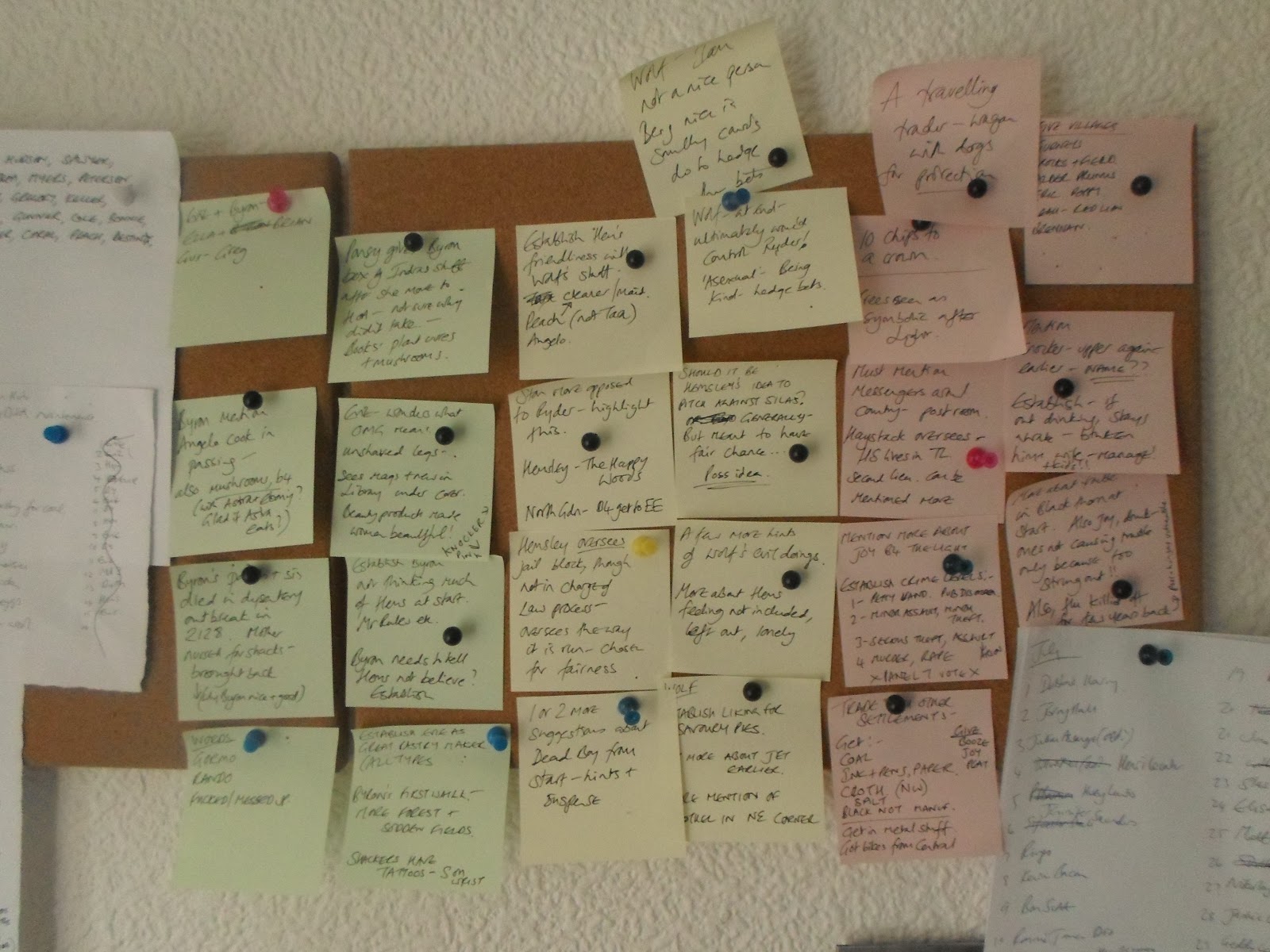
I'm not a perfect writer; no one is.  But you owe it to yourself to make the book as good as it can be.  I find that as I write the first draft, I realise that other sections earlier on might need some tweaking.  Or I see that more emphasis is needed on certain aspects.  To this end, I have post-it notes all over a board in front of my desk, which I put into order when I'm about to start the next draft.  They say things like 'make more clear that Byron doesn't like Hemsley', 'establish that Evie is a fabulous pastry cook', 'Need more detail about the trouble in the city before Ryder turns up'.  By the time I'm at the end of the third draft, I've got the story about right.  Then it's time to look at every sentence and see if it could be written more succinctly.  


Redraft until you're sick of the sight of it.  And then do another one.

Hope this helps!


Friday, 31 May 2019

Amazon Exclusivity (KDP Select) or Publishing 'Wide' ~ which works best? #SelfPublishing


Recently I've been talking to a couple of authors unsure whether to take books off Amazon KDP Select and go 'wide' (ie, publish across many retailers), or whether to move from 'wide' back to KDP Select.  


In the interests of research, I ran a poll on Twitter to see how other authors felt about the two options.  I also invited comments; see lower down for the results.

For new writers not in the know: one massive advantage of publishing exclusively to Amazon is that your books can be made available on Kindle Unlimited.  This works, for the reader, like a library; they pay £8/$10 a month to read any books on KU, free of charge.  The author gets paid per pages read; the royalties for a whole book are roughly equivalent to one sale.
  • Advantage for author: it's a great way for new readers to discover you, at almost no cost to them.
  • Disadvantage: if they don't like it, and abandon it early, you will earn little, or nothing (you get paid for any pages read after 10%).
The other advantage of KDP Select is that you can do 5 day free promotions once every 90 days, or Kindle Countdown promotions - you can price your book as cheaply as 99p for a whole 7 days, but still get the 70% royalty.

I couldn't vote as it's my poll, but I've always been Amazon KDP Select only.  I make more in royalties via Kindle Unlimited that I do with actual sales, and have had some very successful free promotions and Kindle Countdown offers.


The advantages of going 'wide' probably speak for themselves - i.e., reaching readers who don't use Amazon Kindle.  I don't know anything about this but I hear Draft2Digital is the best and easiest way to go.  Read FAQs about this HERE 

Writer Georgia Rose (see below), who has chosen and been most happy with this option, told me:  

'D2D is a distributor.  You load up your files to them and they can distribute to sites such as Barnes & Noble, Apple, Playster and Scribd, including libraries.  The will distribute to Amazon, though this is not recommended.  The advice from those in the know suggest you go DIY to Amazon, Kobo and Google (if you can get in there - it can be tricky), and let D2D cover the rest.  On their dashboard it is easy to deselect the platforms to which you don't want them to distribute.'


Well, not quite...


Poll results 


86 writers voted

Amazon KDP Select: 55%

'Wide': 33%

Tried both, not much difference: 12%

**

Here are comments from some who responded:

In favour of KDP Select

'Tried both (only with 1 book, so pretty limited) but have come down on the side of KDP - the KU promo side of it seems unbeatable at the moment.'

'Have got one on KDP and one wide, most of sales for both are on Amazon...have only recently moved onto KU, sales have dropped off, but pages read seem to be doing well. My first book was on lots of platforms, but the vast majority of sales were on Amazon. Made it a no-brainer to put next book on amazon only.'

'KDP. Kindle Unlimited makes me more than sales.  I think if you write bigger historicals like I do, it's a no-brainer. And so much easier to just push your marketing to one avenue than eight or ten.'

'Kindle Unlimited seems, at the moment, the best way for me to reach readers.

'I think Kindle Unlimited seems to work on my Indie books.'

'As to your question, I used to be wide but the tried KDP Select on one book and saw how much better that did with the page reads, so I’m off wide now completely. About half my income comes from page reads.'

'I have done much better by staying exclusively with Amazon in the past, with all of my books.'

..and a last comment'I didn't see this in time, but I'd have voted for KU too'

**


In favour of 'wide'

'I’m wide. Have been for a while. I don’t like exclusivity and can still do all sorts of promos, including free ones if I want to...I think a good idea is to keep a first book in Select then once you put the next one out make the first one wide, and so on.

'...what I do is distribute direct to Amazon, Kobo and Google then to all the others via the magnificent Draft2Digital, and PublishDrive (early days there!) D2D provide a universal link to all sites (incl. The Zon) so just the one link needed...I do very little promo as I don’t have time. But via distributors like Draft2Digital you load up your files once, they distribute for you.

'.... but you are totally beholden to Amazon. All your eggs in one basket as it were, when they could change anything at any time.'

'I tried KDP Select back in 2013 but it just failed - I gave up after 6 months. I broke out in 2015 on Kobo Canada' 

'I prefer wide. I sell more on ibooks, followed by Barnes & Noble and Overdrive.'

'I'm wide because the opportunities for promotions with Kobo means I make about 25% of my money from there each month, sometimes more. It's my 2nd most successful site after Amazon. Also, I don't like the idea of being tied to Amazon in case anything goes wrong with KDP.'

'Personally, I’m wide. From my point of view it’s not possible to be an independent author while being entirely dependent on the whims of Amazon. My first year off self-publishing, 99% of my sales came from Amazon. Today, almost a third of my sales come from other platforms.'

'I think it's better to go wide, so you can reach more readers. Ku didn't work for me.'

 'You can also go wide by using Ingramspark publication and distribution service'


A bit of both

'I have an e-book publisher who does the work of getting my books out wide, they do print and audiobook as well so I like them. Still, most of my sales are Amazon. & I have a few indies that are KDP. Don’t want to do the going wide work myself'

'..personally I would recommend: KDP exclusive for 3 months for exposure and then go wide'

 'I’ve tried wide and it’s hard to make a dent. Even with KU pages read fluctuate a lot.'

(About doing audio books) 'My audiobooks are a 3-way contract with me, publisher & Amazon. Voice actors get same royalties as author. It’s a way for Amazon to fill their Audible catalog for the freebies. Maybe pitch to Amazon/Audible?'


And finally.... 

'There's so much to learn in this business, it really helps if others share their own experiences so you can try and avoid them and keep moving forward instead of encountering setbacks.'

Which is why I write these posts!

If you are new to the game and are looking for a bit of mentoring/support from the wise, you might like to take a look at Shelley Wilson's Writer Mentoring ProgrammeShelley is one of the most approachable people I've ever met, and is so easy to get on with, positive and practical.  


I can also recommend Georgia Rose's Three Shires Publishing - self-publishing support services that may be of use to anyone wary of going it alone.  Georgia is very helpful and really knows her stuff!


Shelley and Georgia are two of the most generous people I've met during my writer and Twitter years.  😀

I hope this has been of help to anyone not sure which way to go - as you can see, there is no 'right' way, and it seems to depend on so many issues like genre, how much work you are prepared to do where marketing is concerned, if you are willing to spend out on advertising, how many books you have, etc.  Comments welcome, of course :)