Showing posts with label Reading. Show all posts

Monday, 5 August 2024

New Book Coming Soon! And #CoverReveal


Publishing around the beginning of September :)

- Safe Zone -


Safe Zone is a stand-alone novel of around 75k words, though it's associated with my SFV-1 series { InfectedDarkness and Reset }.  


The blurb so far...

Ten years after the SFV-1 rage virus devastated the world, the population of the UK is confined to one corner of the South East.  The newly recognised state of the UK Safe Zone is protected by a vast wall around the entire landmass, and by patrol boats around the coast.

Within, the creation of a new, functioning society is a work in progress, hindered by the fact that not everyone has arrived of their own free will, and some have been irrevocably damaged by the trials of the past decade.

Then there's the dark cloud on the horizon - news of a greater threat in Europe, that's heading their way...

***


Tuesday, 22 February 2022

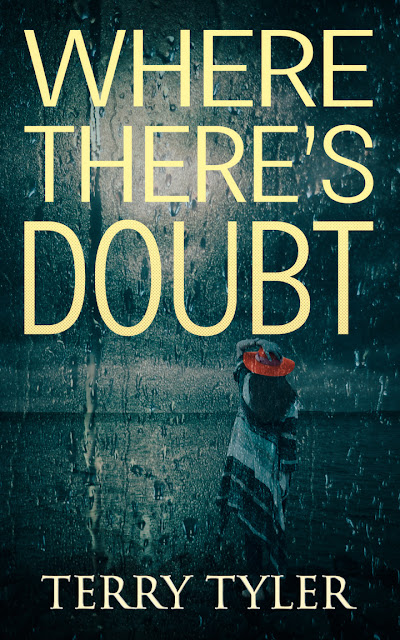
#NewRelease - WHERE THERE'S DOUBT


Meet romance scammer Nico Lewis ~ and his victims... 

💔💔💔


Now available on all Amazon sites -

click HERE

Free to read on Kindle Unlimited

See below for blurb etc!


Basic genres/themes: 

  • Psychological Drama/thriller
  • Romantic Suspense
  • Romantic Con Artist
  • Mystery/Conspiracy
  • Murder
  • Betrayal
  • Publishing Scam


Blurb 

'I can be anything you want.  Even if you don't know you want it.'

Café owner Kate is mentally drained after a tough two years; all she wants from her online chess partner is entertainment on lonely evenings, and maybe a little virtual flirtation. 

She is unaware that Nico Lewis is a highly intelligent con artist who, with an intricately spun web of lies about their emotional connection, will soon convince her that he is The One.  

Neither does Kate know that his plan involves women who seek love on dating sites, and his small publishing business.  A host of excited authors also believe Nico is about to make their dreams come true.

Terry Tyler's twenty-fourth publication is a sinister psychological drama that highlights the dark side of internet dating—and the danger of ignoring the doubts of your subconscious.


Tuesday, 7 December 2021

The Best #Book Trailers I've Found! #WritingCommunity #Writers


What a find!  

I saw a book trailer complete with music on a pinned tweet, commented on how much I liked it ... and discovered it was made by writer Kathleen Harryman.

I got in touch with Kathleen, told her what I was looking for - and was somewhat blown away by the results.  She was a delight to work with, keen to understand the mood of the books and what I wanted to convey, with masses of her own ideas. She is so creative, super-talented at what she does, so if you're looking for this sort of thing, do get in touch with her to discuss your requirements/pricing, etc.  She also does book covers and other digital artwork.

Here are the videos for my dystopian Operation Galton series - if you would like to look at the books themselves, just click the title.  Do put the sound on, because the music adds so much!  At the end are the videos that first caught my eye; a totally different genre that shows how versatile Kathleen is.  

HOPE

(short version)


WASTELAND


(short version)


MEGACITY


WHOLE SERIES


And here are two videos that Kathleen made for...

 THE WAITING HOUSE A Novel in Stories 

by Lisette Brodey, that made me think, I want some of those!  

Again, click the title to see full details about the book.

I think the music for these is so haunting...beautiful


Wednesday, 20 October 2021

WWW Wednesday


WWW Wednesday is a meme hosted by Sam at Taking on a World of Words. It’s open for anyone to join in and is a great way to share what you’ve been reading :)


Currently Reading:

The Grifter by Sean Campbell & Ali Gunn


📚


Most Recently Read:

Creation by Bjorn Larssen


📚


Going to Read Next:

Cousin Calls by Zeb Haradon


Monday, 26 April 2021

New Release! Megacity - Part 3 of the dystopian Operation Galton trilogy


Out Now!

- M E G A C I T Y -

Click for Amazon (universal link)

Sequel to Hope and Wasteland


Operation Galton is named after Frederick Galton, a pioneer of eugenics in the 
late 19th and early 20th centuries; it was he who invented the term

~*~

The UK's new megacities: contented citizens relieved of the financial burden of home ownership, living in eco-friendly communities.  Total surveillance has all but wiped out crime, and biometric sensor implants detect illness before symptoms are apparent.

That's the hype.  Scratch the surface, and darker stories emerge.

Tara is offered the chance to become a princess amongst media influencers—as long as she keeps quiet and does as she's told. 

Aileen uproots to the megacity with some reluctance, but none of her misgivings prepare her for the situation she will face: a mother's worst nightmare. 

Radar has survived gang rule in group homes for the homeless, prison and bereavement, and jumps at the chance to live a 'normal' life.  But at what cost?

For all three, the price of living in a megacity may prove too high.


Megacity is the third and final book in the dystopian Operation Galton trilogy, and is Terry Tyler's twenty-third publication.

'As long as some of us refuse to live as they demand, we are not yet beaten.  That's how we do it.  That's how we win.'


Sunday, 25 October 2020

Rosie's Review-A-Book Challenge #RRABC

Introducing Rosie's Review-A-Book Challenge #RRABC


Did you know that 99% of the reading public never post a review for a book?

At Rosie Amber's Book Review Team (six years and going strong!), we often look at ways to encourage more people to review.  This autumn, Rosie has planned a Review-A-Book Challenge, with a great list of books to choose from, all free of charge to anyone serious about writing a review for her blog - and possibly joining the review team, if you enjoy the process.
 
(In June this year, I wrote about why I love being a member of the team - it's HERE if you would like to take a look)

Each day for a week or so, she will feature articles on how to write simple reviews, on choosing a star rating, and many more.  The challenge is open to all, from experienced reviewers and book bloggers, to those who have never written a review.  If this has piqued your interest and you would like to take a look at the books on offer, please click here to read the full post and view the book list.


Tuesday, 30 June 2020

Six Years of Rosie Amber's Book Review Team


I have been a member of Rosie Amber's Book Review Team (#RBRT) for five and a half years, now.  I first 'met' Rosie online when looking for reviews for my own early books, and through her some of the other bloggers who later became part of the team.

I admit to being wary of making the commitment when I joined the review team, but I'm so glad I did; Rosie has created something so positive for the independently published world (the team deals mainly with the self-published or those published by independents), and I am proud to be a part of it.  When I joined, I decided to start my own book review blog - I don't profess to be a 'proper' book blogger as I'm primarily a writer; I don't take submissions and use it only for reviewing for Rosie and my own reading choices, but it's something I enjoy doing. 😀


If you are interested in joining us, Rosie has written an article about how her review team works, on BookerTalk blog - you can read it HERE.  Details of how to apply to join are HERE.  You don't need to have a book blog, and you don't need any credentials apart from a love of reading.

There are two main reasons why I'm so glad I joined the team, equally important.  The first is the discovery of some truly excellent books; now and again, you find a real gem, that you want to shout about; so often these are books that are hidden away on Amazon and you would have never discovered, had the author not submitted.  Here are a few that made me feel this way (link takes you to my review):

The Men by Fanny Calder
The Usurper King  by Zeb Haradon
The World Without Flags by Ben Lyle Bedard 
Singularity Syndrome by Susan Kuchinskas
The Unrivalled Transcendence of Willem J Gyle by James D Dixon
The Unravelling of Brendan Meeks by Brian Cohn
Back Home by Tom Williams


Other books I've loved are highlighted on Rosie's two part post:


The second reason I love being a part of #RBRT is that some of us have become real life friends, too, enjoying several meet-ups.

Here are me, Rosie, Shelley, Cathy and Barb, in Matlock, April 2019 - a lovely weekend!


Leicester, December 2016


With Rosie, Cathy, Barb and Alison - Sheffield, October 2015

  
Here's to six more years of Rosie Amber's Book Review Team! 💃

Thursday, 16 April 2020

Wasteland is LIVE!


Now available on all Amazon sites:
Click HERE


~ W A S T E L A N D ~
(sequel to HOPE)


'Those who escape 'the system' are left to survive outside society.  The fortunate find places in off-grid communities; the others disappear into the wasteland.'

The year: 2061.  In the new UK megacities, the government watches every move you make.  Speech is no longer free—an 'offensive' word reaching the wrong ear means a social demerit and a hefty fine.  One too many demerits?  Job loss and eviction, with free transport to your nearest community for the homeless: the Hope Villages. 

Rae Farrer is a megacity girl through and through, proud of her educational and career achievements, until a shocking discovery about her birth forces her to question every aspect of life in UK Megacity 12.

On the other side of the supposedly safe megacity walls, a few wastelanders suspect that their freedom cannot last forever...


Wasteland is the stand-alone sequel to Hope, and is the second and final book in the Operation Galton series. 


Sunday, 13 October 2019

BLACKTHORN is live! #NewRelease


   Just 99p/equivalent until end Dec 1st!
On Amazon HERE 
(universal link)


BLACKTHORN


The UK, year 2139 
One hundred and fifteen years ago, a mysterious virus wiped out ninety-five per cent of humanity.


Blackthorn, the largest settlement in England, rose from the ashes of the devastated old world. It is a troubled city, where the workers live in crude shacks, and make do with the worst of everything.


It is a city of violent divisions, crime, and an over-populated jail block―until a charismatic traveller has a miraculous vision, and promises to bring hope back to the people's lives.


Blackthorn falls under Ryder Swift's spell, and most devoted of all is the governor's loyal servant, Lieutenant August Hemsley.


Twenty-one-year-old Evie has lived her whole life in the shacks.  She and disillusioned guard Byron Lewis are two of a minority who have doubts about Ryder's message.  Can they stand against the beliefs of an entire city?


Would you believe what this man told you?  It's actually a model called Ben Dalhous, but it's exactly how I picture Ryder Swift :)


These two are the nearest I can find to Evie; the bottom one is totally her; pity you can't see her face!  
The top one is actress Alexandra Daddario.


....and Byron


Thursday, 25 April 2019

6 Ways To Create Characters That Readers Care About.

This is something I've been thinking about a lot over the past few weeks, as I start a new novel and am working on getting inside the heads of my new characters.

I'll start by saying that I have no Masters in Creative Writing, and have never been on a writing course - what I do have, though, is nineteen published books, with many, many reviews that talk about my character realism, so I hope some of this advice will help new writers who aim to achieve similar.

***

1. Develop a clear idea of who your characters are

Sometimes I have to write a few chapters from my characters' points of view before I really get a feel for them.  Most of my novels are written from a few 1st person POVs, and, during the beginning of the first draft, I may be unsure of exactly who they all are; it's not unlike when you first get to know someone in real life.  The more you explore the inside of their heads, the clearer the different aspects of their personalities become.


When I start a new novel, and I've, say, written a chapter from Evie's POV, then one from Hemsley, then one from Byron, I will re-read Evie's first chapter to reacquaint myself with her before starting her next chapter.  I do a lot of re-writing in the 1st draft!  Similarly, when you're writing a sequel, or the next part in a series, it's a good idea to read the whole of the last book through before you begin the next one.  It will remind you of all those little idiosyncrasies of speech that it's so easy to forget, and it keeps the flow going.

Now and again, I find that the personality I decided upon when I was planning the story out doesn't quite fit the plot, so I have to make some tweaks - and these tweaks need to be made all the way through.  For instance, if you realise, in Chapter 10, that Byron needs to be less introverted than he has appeared so far, you'll need to go back to the beginning and modify his actions, reactions and thoughts, even how communicative he is, all the way through. This is how you keep the characters real, and believable; readers pick up on sudden, inexplicable personality shifts.


2. Are you sure your main character is worthy of star billing?

In Tipping Point, the first book in my post apocalyptic series, the main character is a 34-year-old mother called Vicky.  When I began the 2nd book in the series, Lindisfarne, I'd already decided that it should include several points of view, one of which would be Lottie, Vicky's 16-year-old daughter.  I soon realised that I adored writing Lottie, the words just spilling out of my fingertips— and that, whereas Vicky was absolutely the right main character for Tipping Point, she needed less centre-stage time in Lindisfarne.  In the 3rd book, UK2, she didn't need very much at all, whereas Lottie was blossoming.


Think about it: how many times, when reading, have you loved a secondary character more than the protagonist?  It's possible that you won't realise until you start writing who the most compelling characters actually are.  I'd planned the series around Vicky, but Lottie became far more colourful.  Reader-wise, I was delighted to find that everyone loved her—Vicky, less so.  Don't be afraid to change your mind!


3.  Take care not to 'lose' the character within the action

In the past year or so I've read a few novels in which the protagonists have been little more than a vehicle for a fast-moving plot.  I haven't believed in them; they've been just a name on a page.  Even if your novel is plot rather than character driven, the MC still has to be three dimensional; if the reader doesn't care about a character, they won't care about how the story develops.  

Whether the MC is busy falling from an aeroplane, getting banged up in a scary South American jail or having tea with her mother-in-law, you still need to know how they think and feel, and their development within the story needs to be feasible.  For instance, it is unlikely that a cossetted, stay-at-home wife who, previously, wouldn't say boo to a goose, would suddenly be able to converse with members of the criminal underworld with ease, just because that's the way you want the plot to go.

Another way that it's easy to 'lose' the character is in a long stretch of dialogue, written when you need to convey certain information.  It's so easy to end up talking in your own voice, rather than the character's, because you're so anxious that the reader will absorb the points.  But Evie might not explain it as eloquently as you would; she might not have as large a vocabulary as you.  Jay might have difficulty expressing himself; Ozzy might use slang words that you wouldn't.  Never forget that it's the characters who are talking, not you!


4.  Avoid over-description of appearance

Mostly, as long as you know if a character is short or tall, fat or thin, fair or dark, if you know their nationality and age, you form your own picture of what they look like, and we all see them differently.  This is why, when books are translated onto the screen, people disagree about the casting choices—and why you don't need detailed descriptions of what people look like, or intricate detail about what they're wearing.  Hands up who skims over long descriptions of outfits, rooms and scenery in books? ✋✋✋✋✋✋ ... and it's a good plan to avoid those appearance description clichés.  You know; flashing emerald eyes and unruly auburn curls for a girl who's a bit feisty.  Jawline that could cut glass and intense velvet brown eyes for the hero.  I once saw someone complaining about the phrase 'heart-shaped face' that she kept reading in romance novels, which amused me.


5.  Writing in multiple POVs?  Make sure they have difference 'voices'.

I've read so, so many books in which I sometimes forget whose POV I'm in because the 'voice' is exactly the same as the previous character.  When you're re-drafting, make sure they don't all use the same words—for instance, it took my 2nd test reader for the book before last to point out that 3 of my characters used the word 'grubby' for someone who was dirty.  Yes, it's a common word, but it's unlikely that they would have all used exactly the same way of describing someone.  This is what your (my!) thesaurus is for. 😉

Different people will use a variety of expletives and slang - for my series, I had a list up on the wall of the words that characters did and didn't use, so I wouldn't have both Dex and Doyle describing Verlander as a 'dickhead'.  But it's not just individual words, it's attitude, sentence patterns, an optimistic or pessimistic feel, whether they use sarcasm, levels of education, usage of slang phrases, profound thought or a more flippant approach... they should 'speak' as differently as people you know in real life.  


6.  Avoid the dreaded 'telling not showing'

Readers don't get to know a character by being told that she has a stand-offish demeanour, or that he speaks hesitantly because of his experiences in the war.  Characters comes alive because of their thoughts, actions and words.  Describing their thoughts is easiest if you write them in the 1st person, of course, but 3rd person can convey them just as well, if you write in 'deep POV', i.e., from inside the character's head, rather than in the form of a narrator.

Examples:
  • 1st person: Just knowing that I'm going to see Joe after all this time is making my stomach churn; please God don't make me still be in love with him. Please.
  • 3rd person (deep POV): Her stomach churned; would seeing Joe again, after all this time, be as gut-wrenching as she dreaded?  Most importantly of all, was she still in love with him?
  • 3rd person narrator: She dreaded seeing Joe again after all this time.  The very thought made her stomach churn; she was so scared that, after all this time, she would find that she was still in love with him.
Either of the first two make you, as a reader, 'connect' with the character more than the third example, don't they?  Stacks of books and articles have been written about the whole 'deep POV' issue; this is just an example to show those who are not aware of the difference.  I usually write in the first person, anyway, so the question doesn't arise so much.

Most of all, I think, you write good characters by slipping into their head as you are writing them.  Becoming them, so you know what they are feeling, how they are seeing a situation; it might be quite different from how you would see it yourself.


Good luck!


Friday, 12 April 2019

Hope is now live!


Hope

On Amazon HERE


'We haven't elected a Prime Minister, we've elected a lifestyle'.

As the fourth decade of the 21st century looms, new PM Guy Morrissey and his fitness guru wife Mona (hashtag MoMo) are hailed as the motivational couple to get the UK #FitForWork, with Mona promising to 'change the BMI of the nation'.  

Lita Stone is an influential blogger and social media addict, who watches as Guy and Mona's policies become increasingly ruthless.  Unemployment and homelessness are out of control. The solution?  Vast new compounds all over the country, to house those who can no longer afford to keep a roof over their heads.

These are the Hope Villages, financed by US corporation Nutricorp.

Lita and her flatmates feel safe in their cosy cyberspace world; unaware of how swiftly bad luck can snowball, they suspect little of the danger that awaits the unfortunate, behind the carefully constructed mirage of Hope. 


Terry Tyler's nineteenth published book is a psychological drama that weaves through the darker side of online life, as the gap between the haves and the have-nots grows ever wider.  Whether or not it will mirror a dystopian world of the future, we will have to wait and see.

~~~