1. If a book is good it will sell of its own accord, without the need for promotion.
Ages ago, a proofreader friend told me about one of her clients, who, though a terrific writer, hardly sold any books. When she suggested various ways of promoting them, his reply was 'but if they're so good they should just sell, shouldn't they?'
The other day, a writer was talking to me about the fact that his books weren't selling. When I suggested methods that might change this, he replied that he didn't like 'blatant promotion', and preferred people to 'discover' his work online, by means of discussion on its subject matter. A nice idea, but I had to stop myself saying, 'So how's that working for you?' I looked them up; they had one review apiece, and I could see by the rankings that they hadn't sold more than a handful.
Here's the thing. Sure, we'd love our online activity to consist only of chatting, and to have others think, 'What a great guy! What fascinating insight he has! I see he's a writer; I'll go seek out his books, and buy them all!' Yes, that will happen now and again, but, mostly, if you don't promote your books, they won't 'just sell', however fabulous they are.
Why not? Because no one will know they exist.

Most self-pub or small indie published writers sell the majority of their books via ebook on Amazon, I find, and it's where almost all start off. But the site contains millions of titles. Millions. Yours (and mine, and everyone else's) are the needle in the haystack; if you don't promote your books yourself, they will become invisible to Amazon users. If they never get clicked on, bought, downloaded on Kindle Unlimited or reviewed, they won't appear on 'also boughts' or recommendations. They will not show up in searches. They may as well be shut in a virtual drawer.
No one is making you promote, if you feel it's a bit naff to do so, or not 'you', or if you just can't be bothered (see below) - that's fair enough. Or, indeed, if you're not fussed, and are just happy to have written them; I know a few who feel this way, and you need read no further! But if you want to sell more than the odd one here and there to people you know and online writer friends, you will need to learn how to do this stuff.

2. You're 'no good at' promotion.
A while back, someone asked me to help to tweet his cut-price offer on one of his books. He asked me, he said, because he was 'no good at' promotion. I was happy to help as I have a silly amount of followers and the book was good, but I couldn't resist questioning this 'no good at' claim. Did he mean he felt embarrassed promoting his own work, or that he didn't know how to? He admitted that he actually meant he couldn't be bothered.
Building up any sort of online platform does take time, and effort, when you'd rather be writing, or watching TV, or reading, or whatever. It means finding out how to use the site(s) of your choice, reading advice articles, following people and interacting so that you gain more 'reach', sharing others' stuff and taking an interest in what they do, seeking out bloggers who will feature you, thinking up ways to present your work on Twitter/instagram/Facebook, without giving your followers a virtual bludgeoning about the head (commonly known as spamming 'buy my book' tweets). If you're not sure how, have a look at what others do. If you would like to read some articles on this subject, click this link and go to the 'Writers and Social Media/Promotion' section.

If you feel shy about it, remember that you don't have to say 'this is a fantastic book, you totally have to read it NOW!'. Your tweets, for instance, can show the book off like an advert, rather than telling everyone it's a #mustread, which is off-putting, anyway. People will investigate further if they like the cover, or think the subject matter sounds interesting. Choose a good quote from a review—not 'I couldn't put it down' or that nice bit that your writer friend wrote about your characterisation and descriptive abilities; find something shorter and more punchy. Or choose a quote from the book itself; a belter of a one-liner, rather than detail about the plot or something that means a lot to you but doesn't work out of context. Then add a couple of hashtags to show the genre, and don't forget the cover - and the buy links!
3. Producing a novel is all about letting the creative juices flow.
You know how it is, when you hit on that great idea. You mull that story around in your mind and get excited about it; you open a new document and get stuck in. You think of new developments when you're away from it, and can't wait to get back to your desk to start making them come alive. You think about your characters until they seem almost as real as people you know, and often more interesting. You have moments when you can hardly type fast enough; your fingers fly over the keys, as your brain creates scenes, settings, new characters.

Thing is, that's only the beginning.
Have you ever tried showing someone a first draft? Did you get any of these type of reactions?
'It was great, but....
- I didn't get that bit about Jake discovering his real father was a famous actor; it didn't go anywhere. Yes, it's a stunning revelation, and, mm-mm, I'm sure it was great fun to write, but it was like you put it in, then forgot about it.
- ...I hate to say it, but did you know you've explained the bit about Lizzie and the king four times? And how come all the characters use exactly the same adjectives and slang?
- Why have you put in a chapter about the architecture of Prague in it for? Ah, I see. You really wanted to write about it, because Prague is so beautiful—yes, I can see you got really carried away! But I was waiting to get on with the story....
- I love this fight scene, but are you sure Jim could just get up and walk away, with those sort of injuries? Oh, I see. He needs to be in Texas that night for the next bit of the plot. But he'd probably be dead. Did you not research knife wounds to the femoral artery?'

I read for Rosie Amber's Book Review Team, and one of the problems I find all too often, with self- or small indie publisher books, is that they simply need more work, to iron out clunky sentences, to get rid of long-winded descriptions, to add clarity, suspense, foreshadowing ... these are the elements that get sorted out in multiple redrafts. You need to go back and start at the beginning, each time. Go through it over and over. Four, five, six and more times, however many is necessary until the book is as 'tight' as you can make it.
I'm not a perfect writer; no one is. But you owe it to yourself to make the book as good as it can be. I find that as I write the first draft, I realise that other sections earlier on might need some tweaking. Or I see that more emphasis is needed on certain aspects. To this end, I have post-it notes all over a board in front of my desk, which I put into order when I'm about to start the next draft. They say things like 'make more clear that Byron doesn't like Hemsley', 'establish that Evie is a fabulous pastry cook', 'Need more detail about the trouble in the city before Ryder turns up'. By the time I'm at the end of the third draft, I've got the story about right. Then it's time to look at every sentence and see if it could be written more succinctly.
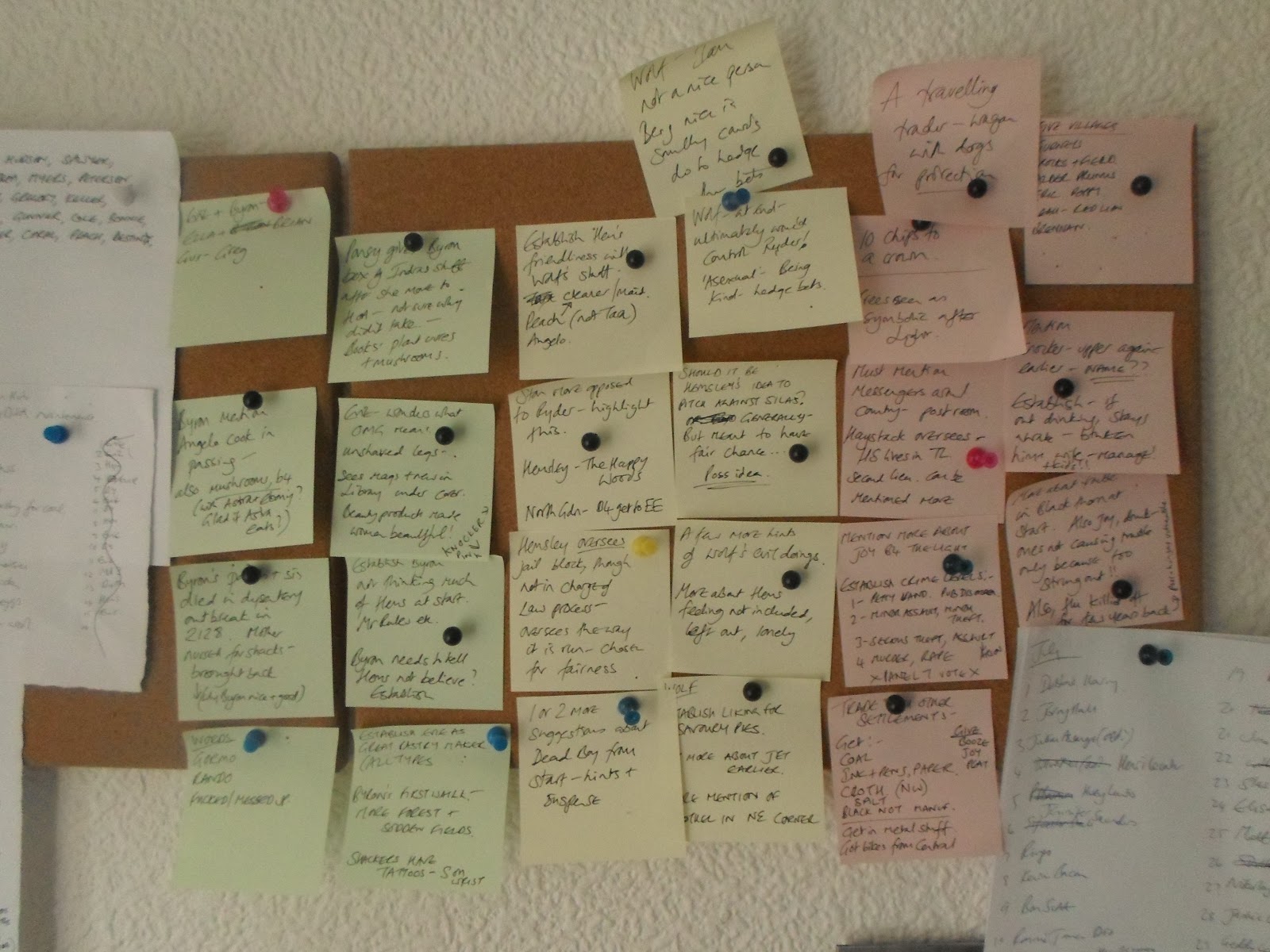
Redraft until you're sick of the sight of it. And then do another one.
Hope this helps!


